Learn when professional fluoride may help protect your teeth, when fluoride toothpaste may be enough, and how often treatment may be recommended.
Fluoride treatment is often associated with children, so many adults are surprised when it is recommended during a routine dental visit.
So, do adults need fluoride treatment?
Not every adult needs professional fluoride at every appointment. However, it may provide useful added protection when cavity risk increases because of dry mouth, gum recession, exposed roots, previous decay, enamel wear, sensitivity, medications, or extensive dental work.
At Granada Dental, we do not take a one-size-fits-all approach. We review your oral health, dental history, home-care routine, medications, and current risk factors before recommending preventive treatment.
What Does Fluoride Do for Adult Teeth?
Fluoride helps support the mineral structure of tooth enamel and makes teeth more resistant to the acids produced by bacteria, foods, and drinks.
Your teeth naturally lose and regain minerals throughout the day. When acid exposure happens too often, enamel may begin to weaken. Fluoride supports the remineralization process and may help protect areas that are becoming more vulnerable to decay.
Adults may receive fluoride from:
- Fluoride toothpaste
- Certain mouth rinses
- Drinking water
- Prescription-strength dental products
- Professional fluoride varnish or gel
For many adults, daily fluoride toothpaste provides an important level of protection. For others, a professional application may offer additional support when their cavity risk is higher.

Are Fluoride Treatments Necessary for Adults?
Fluoride treatments are not necessary for every adult in the same way or on the same schedule.
The need for treatment depends more on your cavity risk than your age.
An adult with healthy saliva flow, no recent cavities, consistent brushing and flossing, and limited sugar or acid exposure may not need professional fluoride as often as someone who has several active risk factors.
We may discuss fluoride treatment when you have:
- Recent or recurring cavities
- Dry mouth
- Gum recession
- Exposed tooth roots
- Tooth sensitivity
- Enamel erosion
- Several fillings, crowns, bridges, or other restorations
- Braces or dental appliances that are difficult to clean around
- Frequent sugary or acidic snacks and drinks
- Medications that reduce saliva flow
- Difficulty brushing or flossing thoroughly
The purpose of the recommendation should always be clear. We explain what we are seeing, why your risk may have changed, and whether professional fluoride is likely to offer meaningful value.
Why Adults Can Become More Vulnerable to Cavities
Cavity risk can change at any stage of adulthood. Someone who rarely experienced decay earlier in life may develop new concerns because of changes in health, medication, diet, gum position, or saliva flow.
Dry Mouth
Saliva helps wash away food particles, neutralize acids, and protect tooth surfaces. When saliva flow decreases, teeth may remain exposed to harmful conditions for longer periods.
Dry mouth may be connected to medications, health conditions, dehydration, or other factors. It can increase the risk of decay, especially around exposed roots and older dental work.
Gum Recession and Exposed Roots
When gums recede, part of the tooth root may become exposed. Root surfaces do not have the same protective enamel as the visible crown of the tooth, which can make them more vulnerable to decay and sensitivity.
Professional fluoride may be considered when exposed roots need added protection.
Previous Cavities and Dental Work
Fillings, crowns, and bridges restore damaged teeth, but they do not prevent future decay from developing nearby.
Plaque can collect around restoration edges, particularly in areas that are difficult to brush or floss. A history of repeated cavities can also suggest that additional preventive support may be helpful.
Frequent Sugar and Acid Exposure
Soft drinks, sports drinks, sweetened coffee, citrus beverages, sparkling water, and frequent snacking can expose teeth to repeated acid attacks throughout the day.
Brushing twice daily with fluoride toothpaste, drinking water after acidic beverages, and reducing frequent snacking can all support enamel protection. Professional fluoride may provide added support when these exposures are difficult to avoid.

Is Fluoride Toothpaste Enough?
For many adults with a low risk of tooth decay, brushing twice daily with fluoride toothpaste is an effective foundation for preventive care.
Professional fluoride is more concentrated than regular over-the-counter toothpaste. It is applied directly to the teeth and is designed to provide additional topical protection.
That does not mean professional fluoride is automatically better or necessary for everyone.
The more useful question is:
Does your current home-care routine provide enough protection for your current level of risk?
We look at factors such as:
- Your recent cavity history
- Your brushing and flossing habits
- Saliva flow
- Gum recession
- Sensitivity
- Diet
- Existing dental restorations
- Medications
- Changes in your health
For some adults, fluoride toothpaste may be enough. For others, professional treatment may help strengthen vulnerable areas and reduce the likelihood of future decay.
Not Sure Whether Fluoride Is Right for You?
We can review your cavity history, sensitivity, medications, gum health, and home-care routine and explain whether professional fluoride may benefit you.
How Often Should Adults Get Fluoride Treatment?
There is no universal treatment schedule for every adult.
When people ask how often adults should get fluoride treatment, the answer depends on individual risk.
Some adults may only need professional fluoride occasionally. Others with moderate or higher cavity risk may benefit from treatment more regularly as part of their preventive visits.
We consider:
- Whether you have developed new cavities
- Whether early enamel changes are present
- Whether your gums have receded
- Whether dry mouth is affecting your teeth
- Whether medications are increasing your risk
- Whether you have exposed roots
- Whether you have extensive dental work
- Whether your diet creates frequent acid exposure
- Whether your daily fluoride use is adequate
We explain the reason for any recommended frequency so you can make an informed decision.

Is Professional Fluoride Safe for Adults?
Professional fluoride has a long history of use in preventive dentistry. When applied appropriately, it can help protect teeth that are at increased risk of decay.
It is still reasonable to ask questions before treatment.
Please let us know about:
- Your medical history
- Allergies
- Medications
- Current toothpaste or mouth rinse
- Dry mouth
- Previous reactions or sensitivities
- Any concerns you have about fluoride
We will explain what product may be used, why it is being recommended, what to expect, and what instructions to follow afterward.
Our approach is built around clear explanations and pressure-free care. We want you to understand the purpose of treatment before deciding whether it is right for you.
What Happens During a Fluoride Treatment?
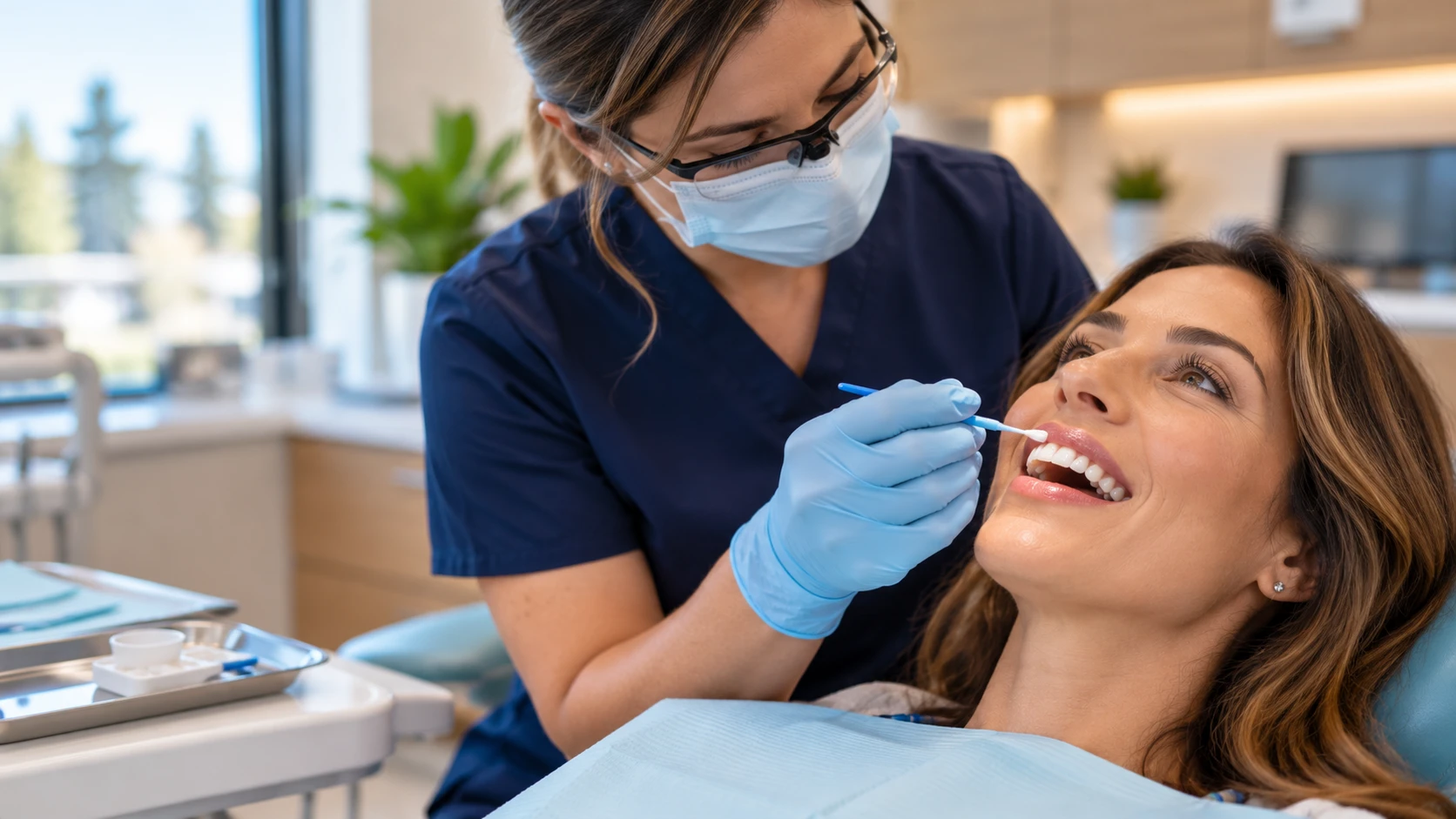
A professional fluoride treatment is usually completed during or after a preventive dental appointment.
The process is generally simple:
- We examine your teeth and gums.
- We review your cavity risk and dental history.
- We clean the teeth when appropriate.
- We apply the fluoride product directly to the tooth surfaces.
- We explain when you can eat, drink, brush, or floss afterward.
Instructions may vary depending on the product used, so we provide guidance specific to your treatment.
When Should You Ask About Fluoride?
It may be worth discussing professional fluoride when:
- You have had a recent cavity
- You are developing cavities more often
- Your teeth feel increasingly sensitive
- Your gums are receding
- You have exposed roots
- You experience dry mouth
- You take medications that reduce saliva
- You have several crowns, fillings, or bridges
- You find it difficult to clean around dental work or appliances
- Your diet includes frequent sugar or acid exposure
Even one of these factors does not automatically mean treatment is required. It means a personalized risk assessment may be helpful.
Has Your Oral Health Changed?
New sensitivity, dry mouth, gum recession, or recurring decay may change your preventive needs.
Personalized Preventive Care in Sherwood Park
We provide preventive dental care for adults in Sherwood Park and welcome patients from nearby communities, including:
- The Meadows
- Capilano
- Gold Bar
- Fulton Place
- Bonnie Doon
- Holyrood
- Strathearn
- Ottewell
- Clareview
- Belmont
- Hairsine
- Sifton Park
- Ardrossan
Our preventive services include dental examinations, cleanings, fluoride treatments, sealants, oral cancer screenings, and digital X-rays.
We focus on practical recommendations, clear explanations, and care that reflects your actual needs.

Do Adults Need Fluoride Treatment? The Answer Is Personal
Some adults benefit from professional fluoride treatment, while others may receive enough protection through fluoride toothpaste, effective home care, healthy saliva flow, regular dental visits, and suitable dietary habits.
Professional fluoride may be more useful when you have:
- Recurring cavities
- Dry mouth
- Gum recession
- Exposed roots
- Enamel wear
- Sensitivity
- Extensive dental work
- Frequent sugar or acid exposure
The decision should be based on your current oral health, not age alone.
Ask Whether Fluoride Is Right for You
We can review your dental history, cavity risk, medications, sensitivity, gum health, and home-care routine and explain whether professional fluoride may provide added protection.
Granada Dental
201-101 Granada Blvd, Sherwood Park, AB T8A 4W2
Phone: (780) 464-6266
Email: granadadental@shaw.ca
- Book a Preventive Care Visit
- Call Us at (780) 464-6266