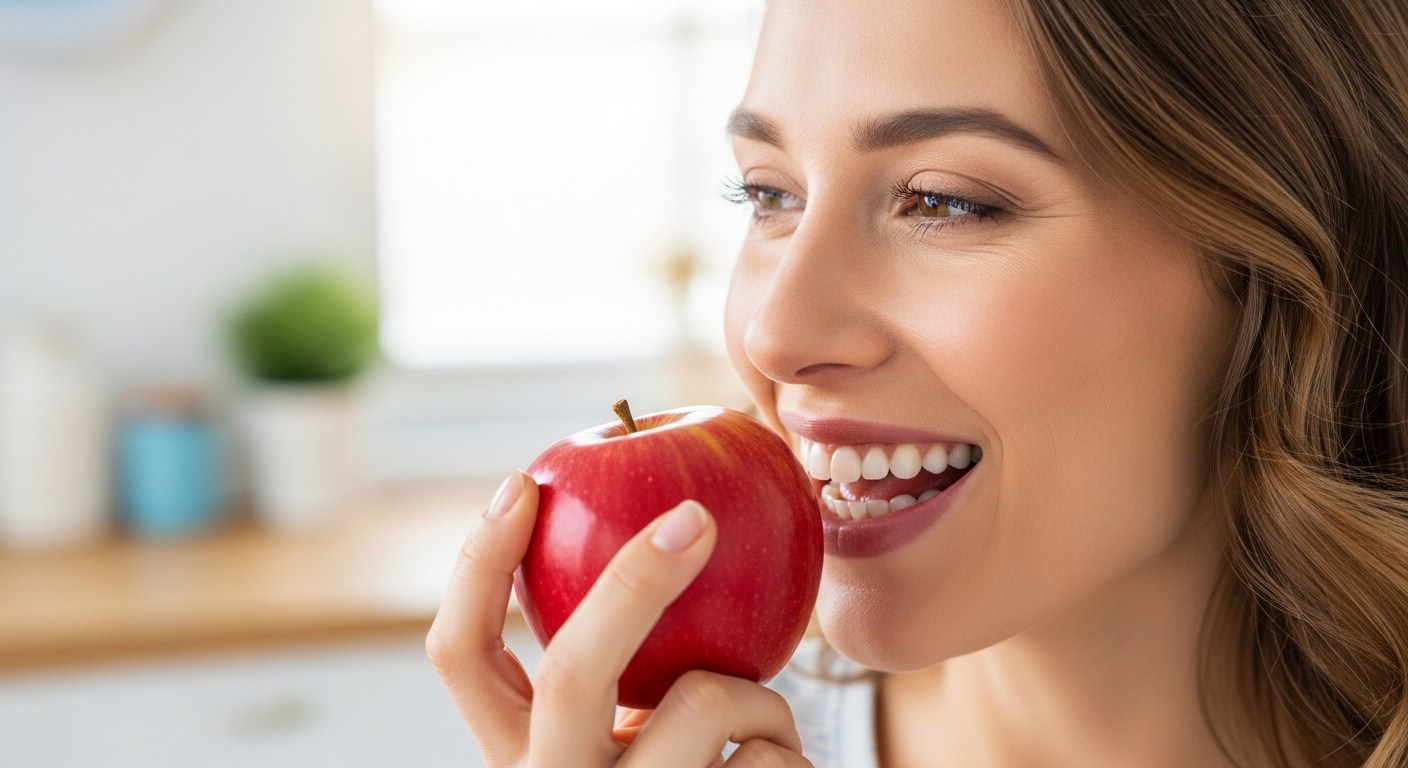
Worried You’ll Chip a Veneer Biting Into an Apple?
If you’re Googling “Can you bite into an apple with veneers?” you’re not overthinking it—you’re trying to avoid a problem you can’t predict. Veneers are supposed to help you feel confident in your smile, not make you feel like you have to tiptoe around everyday food.
Here’s the practical answer: many people with veneers can eat apples, but whether you should bite straight into one depends on a few real-world details—your bite, the type of veneer, and habits like clenching or grinding. The good news is that most of the risk comes down to simple, manageable factors (and you can absolutely keep life feeling normal).
If you’re in Sherwood Park (or nearby areas like The Meadows, Capilano/Gold Bar/Fulton Place, Bonnie Doon/Holyrood/Strathearn/Ottewell, Clareview/Belmont/Hairsine/Sifton Park, or Ardrossan), this guide will help you understand what matters—and what to do next if you want a clear, personalized answer.
Call (780) 464-6266 or email granadadental@shaw.ca to book a veneer consult and get bite-based guidance that fits your daily routine.
The quick answer: yes—but the “how” matters
When you bite into an apple, your front teeth take force in a very specific way. Think of it like this: your front teeth are doing a “tear” motion, and that pressure tends to focus at the edge of the tooth. With veneers, that edge can be one of the more vulnerable spots—especially if your bite contacts heavily in the front.
That doesn’t mean veneers are weak. It just means the apple question is really a question about force, angle, and repetition.
You’ll usually be in the “low risk” zone if:
Your bite is balanced (your back teeth share the work)
Your veneers were planned with function in mind
You don’t grind/clench heavily
You’re not routinely biting hard foods with your front teeth
You’ll want to be more cautious if:
Your front teeth hit first when you close
You grind/clench (even “just sometimes”)
Your veneers already have wear at the edges
You frequently bite hard foods at an angle
What most people are actually worried about (and why it’s valid)
People rarely ask this question because they love apples. They ask because they’re wondering:
“Am I going to chip something doing normal life?”
“Will I have to change how I eat forever?”
“What if I paid for veneers and I still can’t relax?”
“If something happens, is it a big deal to fix?”
Those are fair questions. Veneers are a decision, an investment, and a confidence thing—so it makes sense to want clarity upfront.
The everyday veneer rule that keeps things simple
If you want one guideline you can use immediately, it’s this:
Default to slicing hard foods—and chewing with your back teeth.
That one habit reduces the “edge loading” that can stress veneers over time. It’s not about avoiding apples forever. It’s about avoiding the specific bite pattern that’s hardest on front teeth.
If you do bite into an apple
If you’re going to bite in, here’s how to make it gentler on veneers:
Take smaller bites
Bite straight on (not angled)
Avoid using your front teeth to “rip” hard foods repeatedly
If the apple is very firm, consider slicing it (it’s an easy win)
What foods matter most (without turning life into a restriction list)
Most people don’t need a strict “never eat this again” plan. They need a realistic way to protect results without feeling limited.
Hard foods
Hard foods concentrate pressure. Common examples:
apples, carrots
crusty bread
nuts (depending on how you eat them)
hard candies
What helps:
cut into smaller pieces
chew with molars
avoid “front tooth tearing” when the food is very firm
Sticky foods
Sticky foods can tug at edges:
very sticky candies (taffy-type)
some chewy sweets
What helps:
limit the stickiest foods
if you do eat them, chew slowly and avoid pulling motions
Habits that sneak up on veneers
A lot of chipping issues come from things that aren’t food:
chewing ice
biting nails
pens and plastic caps
opening packages with teeth
If veneers are on your mind, these are the first habits worth stopping. They’re high-stress, high-repeat, and they don’t add anything to your day.
The real issue usually isn’t the apple—it’s your bite
This is the part most people don’t hear until later: veneers can be strong, but your bite determines how that strength is used.
If your front teeth hit first, or if the contact is heavy on one side, those veneers are doing extra work. Over time, extra work is what wears edges down and raises the chance of a chip.
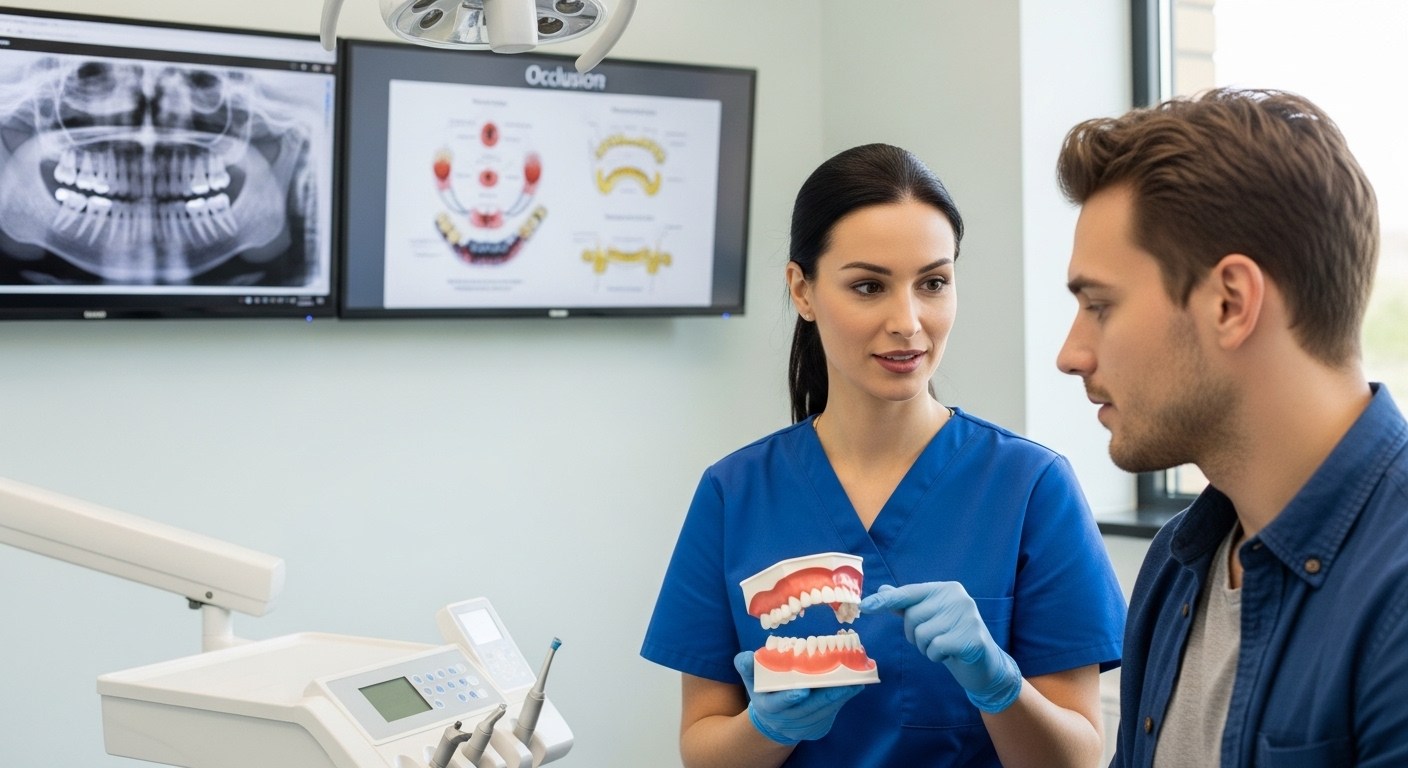
What a bite check can tell you quickly
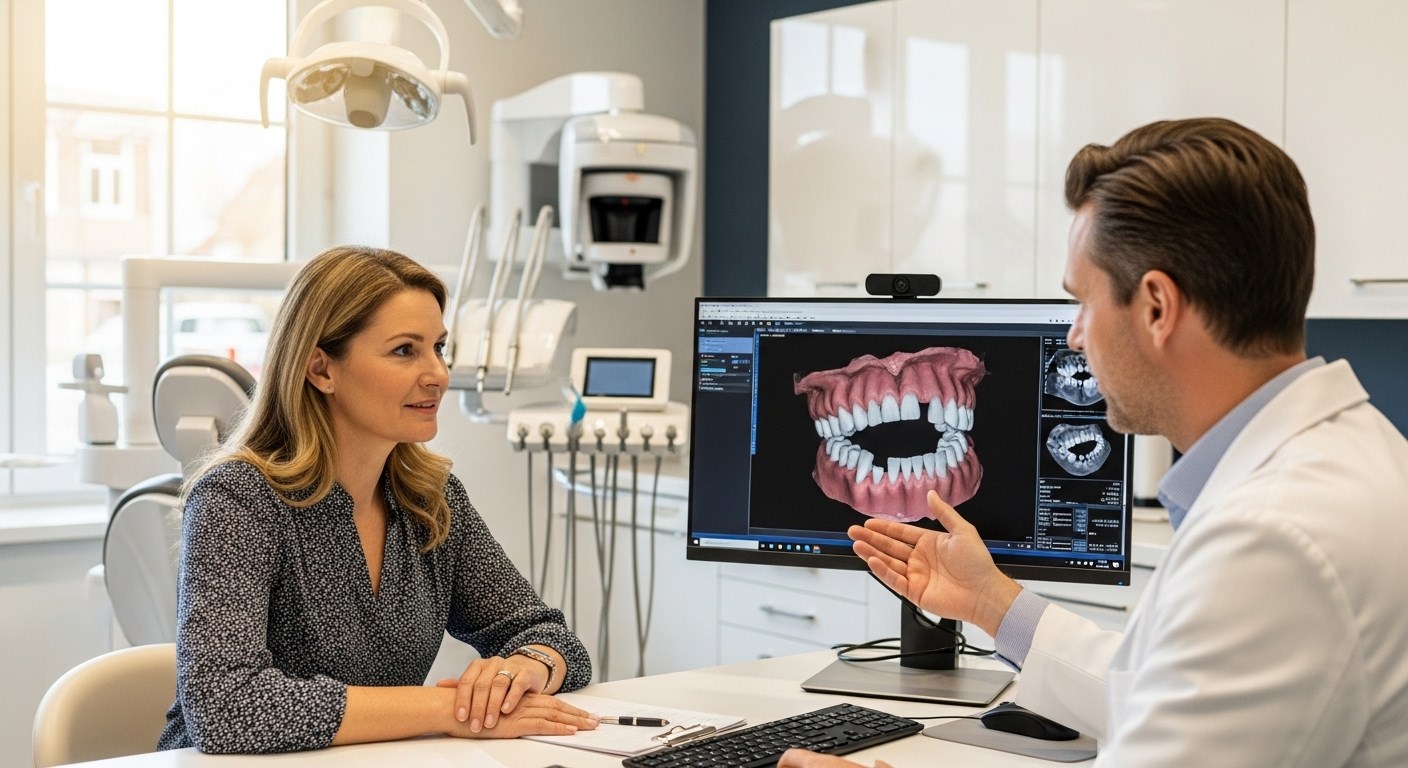
A bite-focused visit can answer questions like:
Are your front teeth taking too much force?
Is there an edge-to-edge contact that should be adjusted?
Are there signs of clenching/grinding?
Would a nightguard help protect your veneers?
If you’ve ever noticed morning jaw tension, headaches, flattened edges on teeth, or you’ve been told you grind—bring it up. Veneers can still be a fit, but planning around bite forces matters.
If you want a clear answer for your teeth, book a consultation. We’ll look at bite contact, talk through material options, and give you food guidance you can follow.
Porcelain vs composite veneers: does the material change what you can eat?
Material affects how veneers wear and how they behave at the edges.
Porcelain veneers are commonly chosen for their finish and stain resistance, and they perform well when planned for function and bite.
Composite veneers can be a practical option in the right case and can sometimes be simpler to repair, though they may wear differently depending on habits.
For most people, the best approach isn’t choosing a material from a list—it’s choosing the option that fits:
your tooth structure
your bite forces
your cosmetic goals
your timeline and maintenance preferences
If your main worry is “I want this to feel normal,” that’s part of the decision-making—not an afterthought.
If something chips: what happens next?
This is the scenario people picture when they ask the apple question. And if it ever happens, the goal is to keep it simple and calm.
What to do right away
Stop chewing on that side if it feels sharp or unstable
Don’t try to smooth it yourself (home filing can make it worse)
Call your dentist and explain what you’re feeling
Depending on the situation, a veneer issue may be:
polished/smoothed
repaired (case-dependent)
replaced if the chip affects function or appearance in a bigger way
The key is not guessing. A quick assessment can usually tell you what’s realistic.
Call (780) 464-6266 and we’ll guide you on what to do next and how quickly you should be seen.
Why Granada Dental is a solid fit for veneer questions like this (especially if you’re cautious)
If you’re the kind of person who asks the apple question, you’re probably not looking for hype. You’re looking for:
a clear explanation
a plan that accounts for real life
a clinic that takes function seriously, not just appearance
At Granada Dental, the goal is to make cosmetic dentistry feel practical and comfortable, with guidance you can actually use. That includes talking through what your veneers can handle, how your bite affects longevity, and what small changes help you protect your results without feeling restricted.
Granada Dental is located in Sherwood Park and serves patients from surrounding communities including The Meadows, Capilano/Gold Bar/Fulton Place, Bonnie Doon/Holyrood/Strathearn/Ottewell, Clareview/Belmont/Hairsine/Sifton Park, and Ardrossan.
FAQs: quick clarity before you book
Can you bite into an apple with veneers?
Often yes, but slicing apples and chewing with your back teeth is the easiest way to reduce stress on veneer edges—especially if your front bite is heavy.
Do veneers break easily?
Veneers are designed for everyday eating, but chips are more likely with repeated hard biting on the front teeth, grinding/clenching, and non-food habits like ice chewing.
What foods should I avoid with veneers?
Most patients don’t need strict avoidance. A better approach is modifying hard foods (slice, chew with molars) and avoiding habits that put unnecessary force on veneers (ice, nails, packaging).
What if I already have veneers and feel nervous about eating?
A quick check can confirm whether your bite is placing extra pressure on your veneers and whether a nightguard or minor adjustment would help.
Next step: get a clear answer that fits your bite and your routine
If you’re considering veneers—or you already have them and want to eat comfortably without second-guessing every bite—start with a consult. You’ll leave with a straightforward plan and realistic guidance for foods like apples, crusty bread, and everyday meals.
Book with Granada Dental (Sherwood Park)
Granada Dental
201-101 Granada Blvd, Sherwood Park, AB T8A 4W2
Phone: (780) 464-6266
Email: granadadental@shaw.ca
Hours: Mon 8:30am–4pm • Tues 8:30am–4pm • Wed 8am–3pm • Thurs 8:30am–4pm • Fri 8:30am–4pm